
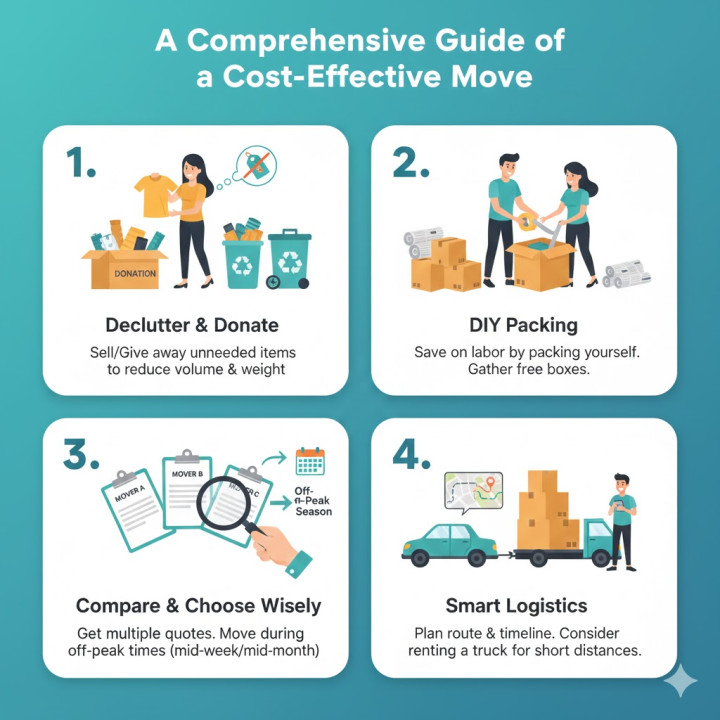
Most people feel moving looks easy when they think about it from far. But once you begin sorting things and arranging the actual work, the costs start showing up one by one. Many also assume that paying a bigger amount means the job will be done better, but that doesn’t always happen. A good move isn’t about spending extra — it’s about using the money in the right places. With some early planning and a few sensible choices, you can cut down the total cost and still have the work done properly.
Many times people end up spending extra simply because they start getting ready too late. Things get missed, they agree to the first mover who picks up the call, or they don’t really check what all is covered in the estimate. Most of the savings actually come from being organised early, not from luck. The points below give a clear idea of how you can cut down the cost and still go through the move without any unnecessary problems.
Start Preparing Early Instead of Rushing Later
One of the biggest reasons the cost goes up is delay. When you decide to shift, prepare as early as you can. So, you get time to compare movers, arrange packing items, clean up the house, and reduce the number of things you’re carrying.
When everything is left for the last two days, movers charge extra for urgent work, materials become costly, and you end up buying things you already had but couldn’t find. A few minutes every day for a week is much cheaper than doing everything in one day and burning money on extra labour.
Reduce the Items You Don’t Need Anymore
Before spending on boxes, packing material, and extra labour, look around your home carefully. There will always be old clothes, unwanted kitchen containers, damaged electronics, books nobody reads, or items stored “just in case” for years.
Compare Quotes – Not Just the Price, But the Details
Many people choose the lowest quote, thinking they have saved money. But a cheap quote often hides missing services like proper packing, bubble wrap, stretch film, or handling of delicate items. Later, when the mover starts adding charges one by one, the bill becomes higher than the original high-quality quote.
Always compare:
What packing material is included
Whether dismantling is covered
How many labourers are coming
Type of truck (shared or dedicated)
Loading and unloading details
Timeline for delivery
Sometimes the “middle-range” quote gives the best value.
Do Simple Packing on Your Own
You don’t have to pack everything yourself, but you can handle the easy parts. Clothes, soft items, books, toys, bedsheets, simple kitchen things – these don’t need special skills. Old bedsheets, old towels, or unused cartons at home can do the job.
When movers don’t have to pack every small item, the total labour time reduces. That directly brings down the charges. The carton boxes provided by movers are often good quality, but you can reduce the quantity needed by packing a few things in your own storage boxes.
Prepare Both Houses Before the Movers Arrive
Another hidden cost is wasted time. When the movers arrive and you’re still trying to gather things, checking cupboards, or clearing space on the floor, the work naturally slows down. And since most teams charge based on the time they spend, any delay on your side usually adds to the final cost.
Before the moving day:
Clear pathways inside the house
Keep packed boxes in one corner
Keep keys, screws, and small items together
Disconnect appliances
Empty the fridge
A prepared house means faster work.
Avoid the Most Expensive Days (Month-End, Weekends, Festivals)
Some days get pricier only because of the date you pick. Towards the month-end, on weekends, or around holidays, most movers tend to raise their charges since many people want to shift at the same time. If you have the freedom to choose any day, try going for a weekday somewhere in the middle of the month. Without changing any other part of your plan, this small adjustment itself can help you cut down the overall cost quite a bit.
Check What Packing Material the Movers Are Actually Using
Sometimes the mover promises good packing but arrives with low-quality cartons or thin wrap. Poor packing means more damage risk, and that can cost you later. You don’t need premium material, but it should be decent enough to handle loading, unloading, and a bumpy road.
Look for:
Thick cartons
Bubble wrap for glass
Stretch film around furniture
Extra padding for appliances
Try to Get a Dedicated Move for Fragile or High-Value Items
Shared trucks may be cheaper up front, but they involve the risk of other people’s goods being mixed with yours. This makes handling tougher and sometimes delays happen. If you’ve got a lot of fragile things, don’t rush into choosing the cheapest option. Just check the difference between sending them in a shared truck and sending them in a separate one. The dedicated option may look a bit costlier at first, but many times it saves you from breakage, delays, and all that running around later. In the end, you actually save money because nothing gets spoiled on the way.
Confirm Hidden Charges Before Booking
Every mover has a different pricing method. Some include GST, some don’t. Some include dismantling, some charge separately. Some include unloading, some ask for extra payment at delivery. Clarify everything before finalising.
Ask simple questions:
“Is this the final amount?”
“Anything extra I should know about?”
“Does the rate change if the truck is delayed due to traffic?”
A two-minute talk can save you from an unnecessary argument later.
Keep a Small Essentials Bag With You
This small bag avoids repeating the mistake everyone makes – opening boxes in a hurry because they can’t find something important. Keep a small bag aside with the basics you’ll need right away – things like your soap, brush, medicines, chargers, a towel, a few clothes, and any small tools you may use. Carry this yourself. It saves a lot of searching later and nothing important gets mixed up in the bigger boxes.
Guide the Team During Unloading
During unloading, tell them where to place each item. If things are kept properly at the new place, you won’t have to call labour again to move a cupboard or a washing machine from one corner to another. Every shift after unloading becomes an additional cost, so guide them once and avoid repeated work.
Conclusion
A good move is not about spending heavily – it’s about being organised. When you clean up unnecessary items, compare movers properly, pack simple things yourself, prepare your home in advance, and choose the right day, the total cost drops automatically. And the best part is that you don’t lose out on quality in the process.
A little planning from your side and honest work from the movers – that combination can easily give you a smooth and cost-friendly relocation.
Email us at info@vpmaxpackersandmovers.com
Contact Us: +91 9630263460